Goddess of Raivavae
The Famous Tiki of Raivavae – sometimes called “the Goddess of Raivavae”
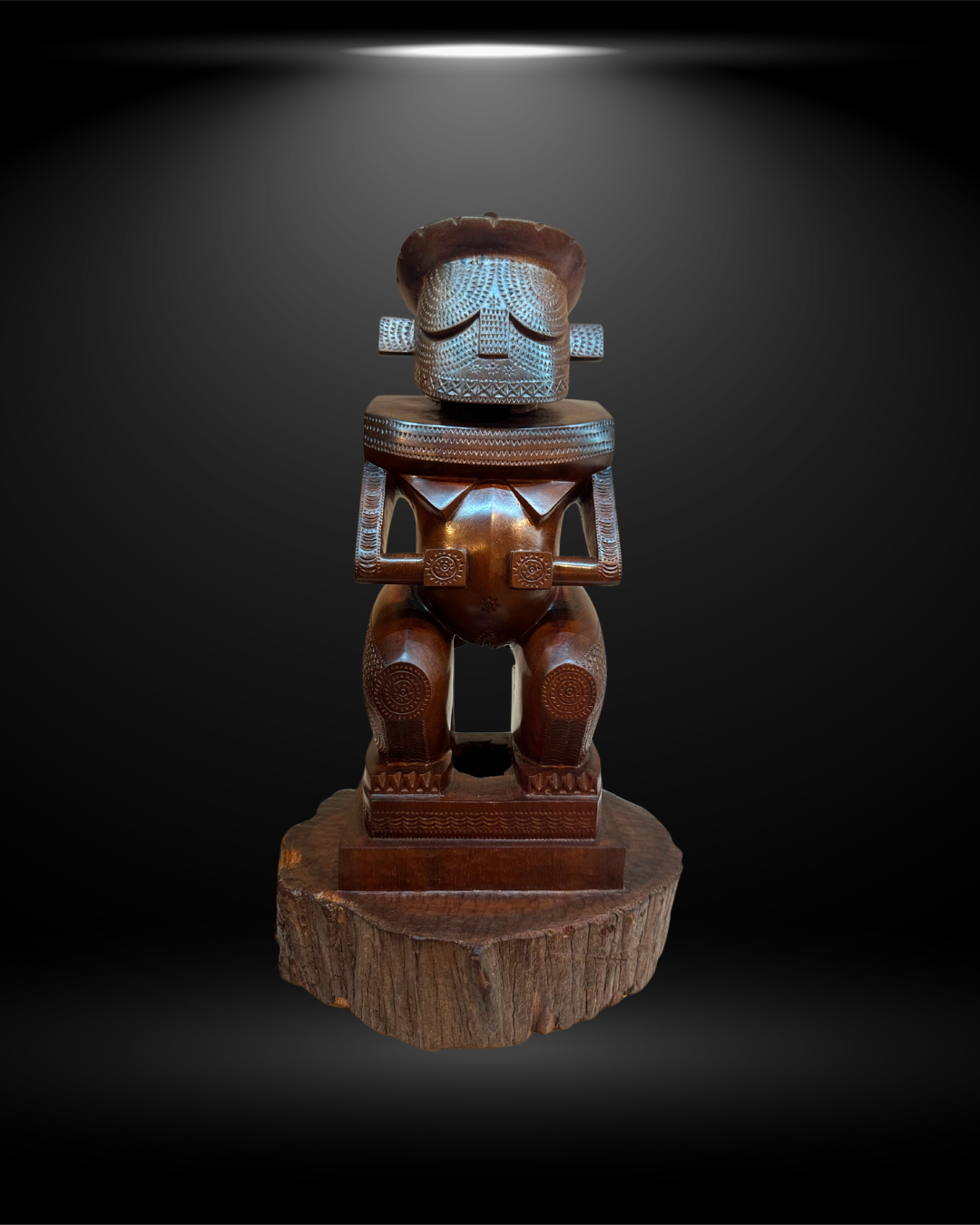
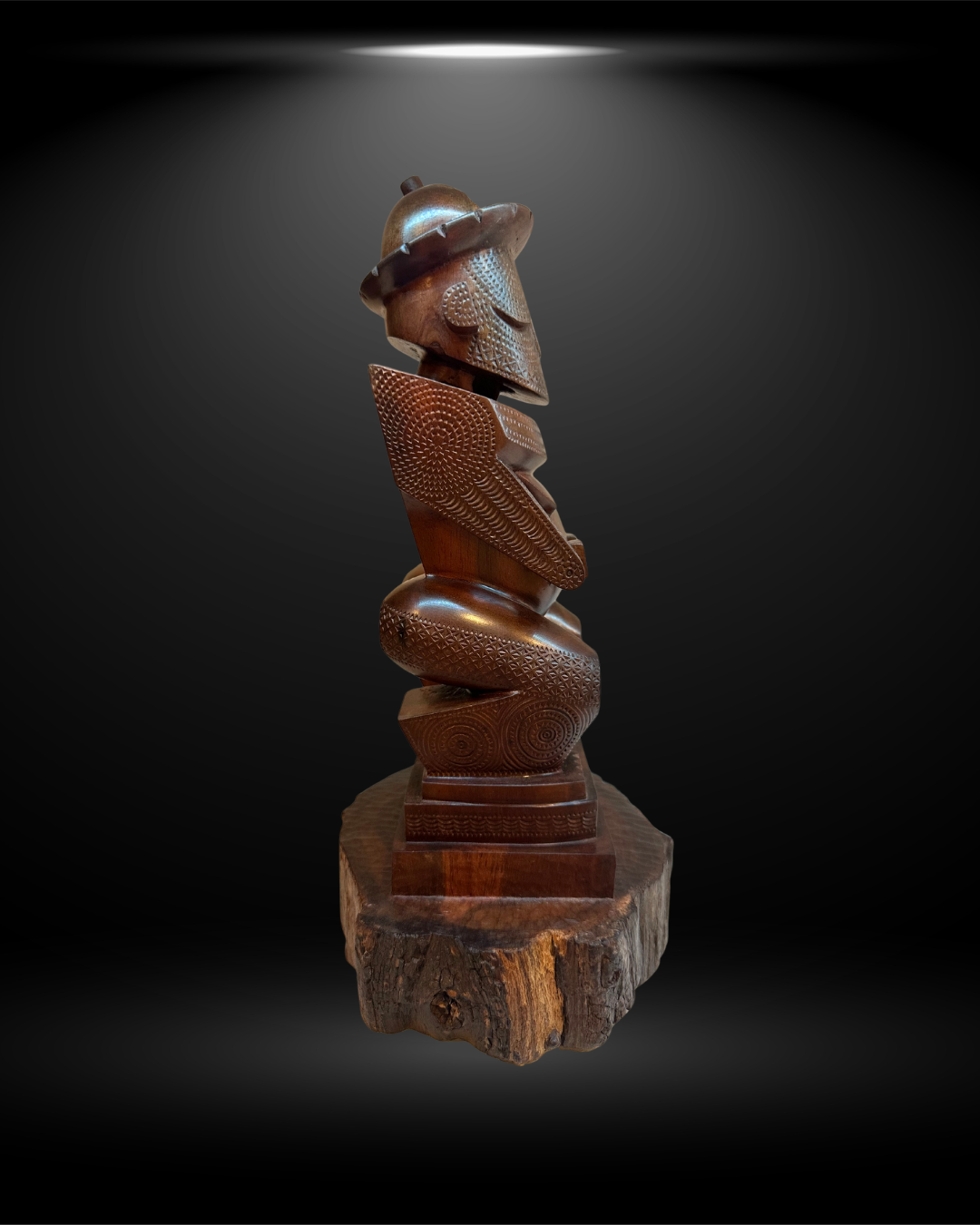
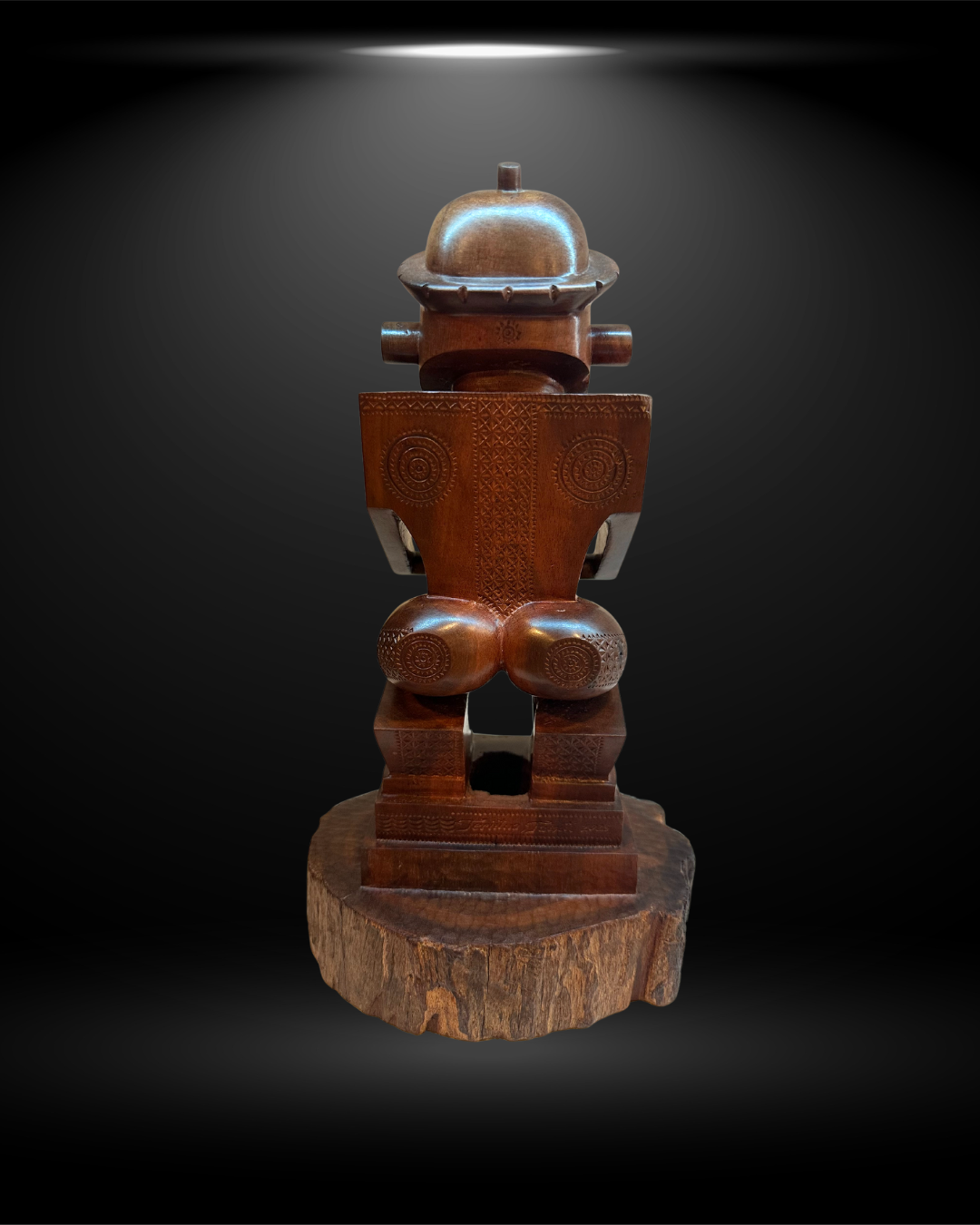
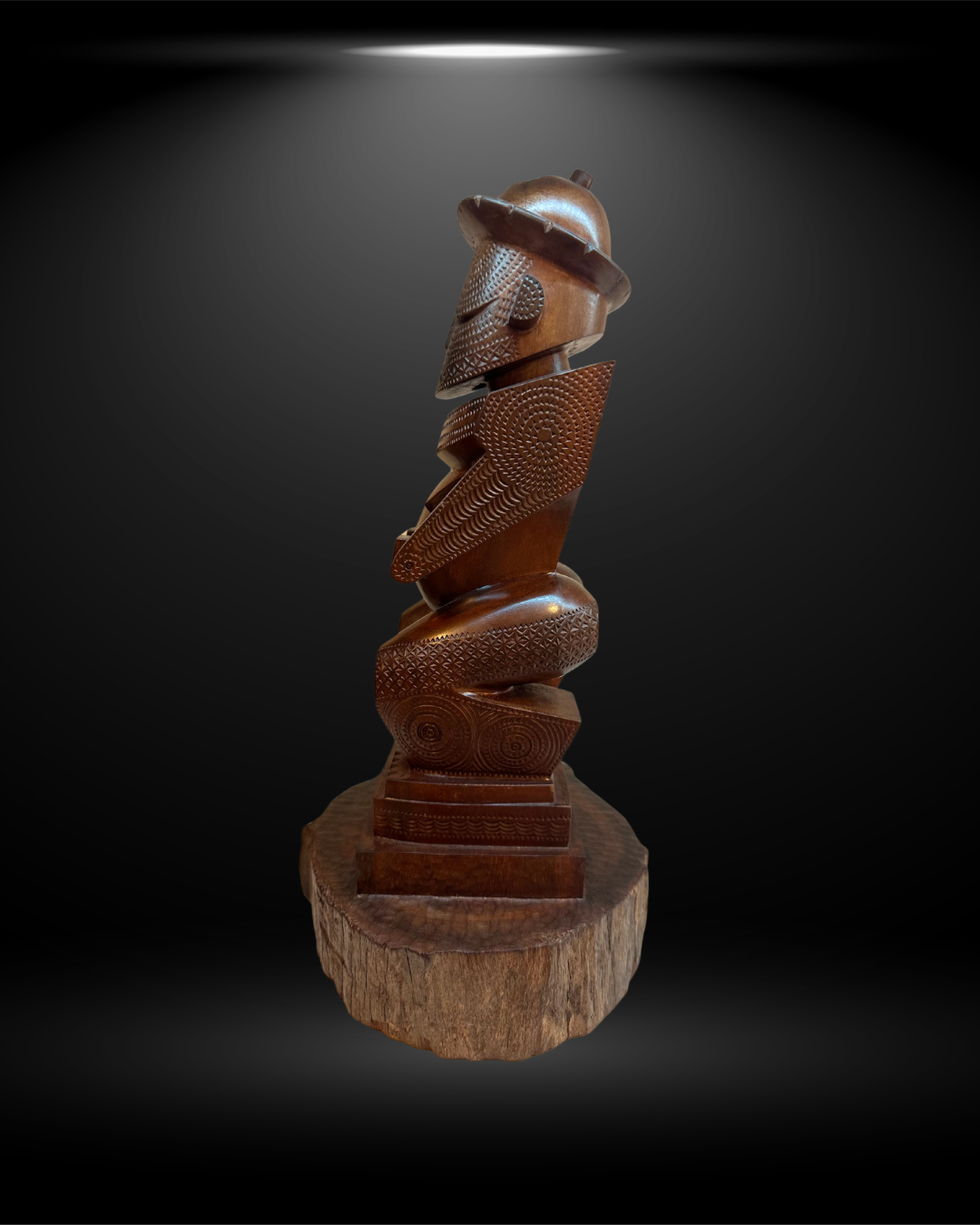
This is an exceptional female tiki, considered one of the very rare monumental female figures in all of Polynesia.
It is also sometimes referred to as the “Goddess of Raivavae” because its appearance and uniqueness deeply impressed the first Europeans who encountered it.
It is distinguished by :
Its stocky, massive body.
Carved breasts, a rare element that contributed to its feminine interpretation.
A relatively large, stylised head, with almond-shaped eyes and a marked mouth.
Arms pressed against the body, with the hands placed on the abdomen, a gesture often associated with the tiki of the Australs.
Its exact function remains hypothetical :
Some researchers believe it was a tutelary or protective figure of a marae (temple).
Others suggest it represented a deified ancestor or a sacred feminine principle.
Conservation and Diffusion
The original of this “Goddess of Raivavae” was collected in the 19th century. It is now held at the British Museum (London), alongside other emblematic works from the Austral Islands.
This tiki is regarded as a masterpiece of Polynesian art, alongside the A’a statue of Rurutu (another island in the
Australs).
A few replicas exist in Polynesia (Museum of Tahiti and the Islands, and in local collections).
Cultural Importance
The “Goddess of Raivavae” embodies a unique iconography, blending Polynesian tradition with a strong local signature.
It has gained strong symbolic value as an emblem of the creativity and identity of the Austral Islands, on par with the god A’a of Rurutu.
Its rare feminine character makes it an important milestone in the understanding of gender and the sacred in Polynesian statuary.